










Carburetor vs. EFI: What’s the Difference, and Why Upgrade?
If you have a classic engine and you’ve been wondering whether upgrading to modern EFI (Electronic Fuel Injection) is worth it, you’re not alone. Carburetors have powered performance builds for decades—and when they’re set up correctly, they can run extremely well. But EFI has become the go-to upgrade for many classic owners because it offers a different level of control, consistency, and everyday drivability.
Below, we’ll break down how carburetors and EFI differ, what EFI improves in the real world, and when a carburetor still makes sense.
How a Carburetor Works
A carburetor is a mostly mechanical device that mixes air and fuel using three main things:
-
Airflow through the carburetor (venturi effect)
As air moves through the venturi, it creates a pressure drop that helps pull fuel into the airstream. -
Engine vacuum signals
Vacuum influences how fuel is delivered through different circuits (idle, transition, main, power enrichment). -
Fuel jets and passages sized for a “best average” condition
Jetting and passage sizes are chosen to deliver a workable mixture across a range of typical conditions.
A properly sized and tuned carb can perform very well. The tradeoff is that once it’s dialed in, it’s largely a fixed calibration. When conditions change, it doesn’t automatically correct the mixture.
That’s why carbureted engines often need manual adjustments for things like:
- Cold starts
- Hot restarts
- Altitude changes
- Weather changes
- Major engine changes (cam, compression, heads, boost)
How EFI Works (and Why It’s Different)
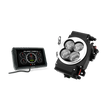
EFI uses an ECU (Engine Control Unit) to calculate fuel delivery in real time. Instead of relying mainly on vacuum signals and fixed jetting, EFI uses sensors to measure what the engine is doing right now and then adjusts fueling accordingly.
Common EFI inputs include:
- Throttle position (how much you’re asking from the engine)
- Engine speed (RPM signal)
- Coolant temperature (cold vs. warm engine behavior)
- Manifold pressure/engine load (how hard the engine is working)
- Oxygen sensor feedback (how rich or lean the engine actually is)
Based on those signals, the ECU:
- Commands the injectors to deliver the right amount of fuel
- Continuously corrects fueling using wideband O₂ feedback
- Can learn and refine the tune over time (self-learning on appropriate combinations)
The Biggest Real-World Difference
A carburetor delivers fuel based on mechanical signals and fixed calibration. EFI delivers fuel based on measured conditions and feedback.
That’s why EFI isn’t just “a carb with electronics.” It’s a completely different control approach: more adaptive, more consistent, and more correctable without turning screws and swapping jets.
Why Upgrading to EFI Makes Sense
1) Easier cold starts and better warmup behavior
Carburetors typically rely on a choke and careful calibration to behave well when cold. EFI handles cold starts automatically by adding the extra fuel a cold engine needs, adjusting idle behavior during warmup, and transitioning smoothly as temperatures rise. The result is more “turn the key and go” behavior.
2) Better hot starts and heat-soak recovery
Heat soak can create real frustrations with carbureted setups—fuel can boil, percolate, or behave inconsistently depending on routing and under-hood temperatures. EFI typically handles hot restarts more consistently because fueling is controlled electronically and can be adjusted precisely during cranking and restart.
3) Automatic compensation for altitude and weather changes
Carburetors are typically tuned for a specific environment and set of conditions, and that works fine as long as those conditions don’t change much. But when air density changes due to altitude, temperature, humidity, or barometric pressure, a carburetor can drift richer or leaner than ideal.
EFI systems automatically compensate by measuring engine load and air density through sensors and adjusting fuel delivery in real time. The result is more consistent performance whether you’re driving at sea level, climbing into the mountains, or dealing with big swings in weather.
4) Improved drivability across the whole range
Many carbureted engines run great at one or two “sweet spots,” but can feel inconsistent elsewhere—off-idle hesitation, part-throttle surging, or flat spots during transition circuits. EFI can smooth out those areas because it maps fuel and corrections across the entire operating range.
5) More consistent performance and reliability
Once EFI is installed and configured correctly, it tends to stay consistent because it is always correcting and operating within a controlled strategy. That consistency matters for daily-driven classics, weekend cruisers, road trips, and builds that see varied conditions.
6) Better control and easier change management
When you change major engine components on a carburetor, you often need to re-jet, adjust air bleeds, change power valves, or rework the tune mechanically. With EFI, changes like cam swaps, headers, intake changes, and even boost or nitrous additions are typically handled through tuning and calibration rather than hardware reconfiguration inside the carb.
7) The timing control advantage (with compatible ignition)
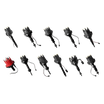
Many EFI setups can control ignition timing when the ignition system is configured for it. This is a major benefit because timing control directly impacts throttle response, power, engine safety under load, and repeatability.
What EFI Is Not
EFI is not magic, and it won’t automatically fix mechanical problems. A good EFI experience assumes:
- Good fuel delivery and stable fuel pressure
- No major vacuum leaks
- Proper ignition health
- Correct sensor installation and wiring
- A realistic match between system capacity and the engine’s demands
EFI improves control. It doesn’t replace engine fundamentals.
Why Some People Still Choose Carburetors
Carburetors still make sense for certain builds, especially when:
- The car is only used occasionally
- You enjoy manual tuning on a carb
- You want maximum simplicity and minimal wiring
- The build is very traditional, and you’re happy with how it runs
EFI is usually chosen when you want better drivability, more consistency, easier starting, less manual adjustment, and a more modern ownership experience.
So, Is EFI Right for You?
If you enjoy tuning a carb, prefer simplicity, or only drive your vehicle occasionally, a carburetor can still be a perfectly valid choice.
But if you want easier starting, smoother drivability, better consistency, and a more modern driving experience (especially in changing conditions) EFI is often the better long-term solution.
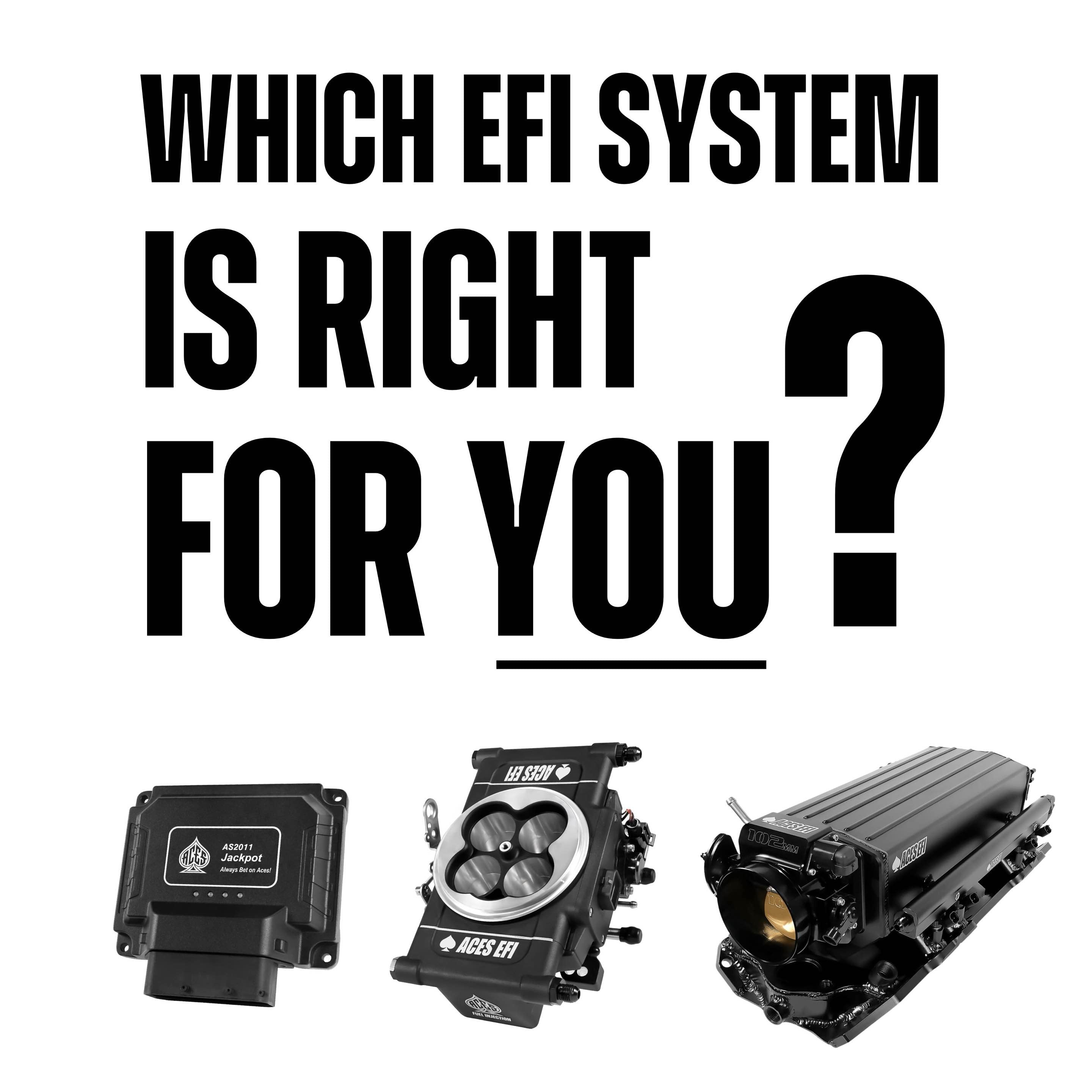
If you want to learn more about Aces EFI systems, installation considerations, or which setup makes sense for your build, check out the resources linked below.


Leave a comment
This site is protected by hCaptcha and the hCaptcha Privacy Policy and Terms of Service apply.